The Indian Head Cent is among the most iconic and historically important coins in American numismatics. Featuring a distinctive image of a Native American head, the Indian Head Cent symbolizes a time of economic transformation, industrial advancement, and cultural significance in American currency. Ultimately, it was succeeded by the Lincoln Cent, which is still the standard design of the United States penny today.
History
The story of the Indian Head cent starts with the evolution of the American one-cent coin in the mid-19th century. Before 1857, the United States minted large copper cents that were considerably larger than today’s pennies. However, rising copper prices made producing these coins costly.
To remedy this situation, the U.S. Mint developed smaller cents made from a copper-nickel alloy. Initially, the Mint released the Flying Eagle cent. Although it was well-received by the public, the design encountered production difficulties due to its high relief, which hindered proper striking during the minting process. Consequently, the Mint sought a more efficient design. In 1859, the Indian Head cent was launched as its successor. Created by James Barton Longacre, the coin rapidly gained popularity.
Design
The Indian Head cent design is one of the most iconic images in the history of American coinage. The coin’s portrait does not depict a Native American; it represents the classic figure of Liberty wearing a Native American headdress.
Obverse (Front)
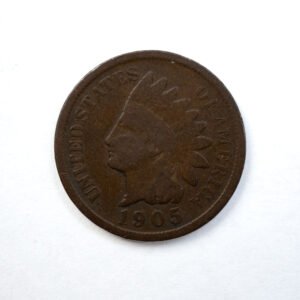
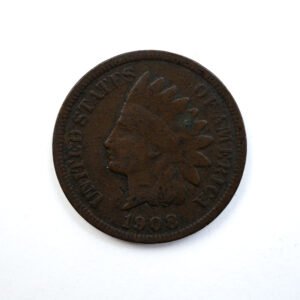
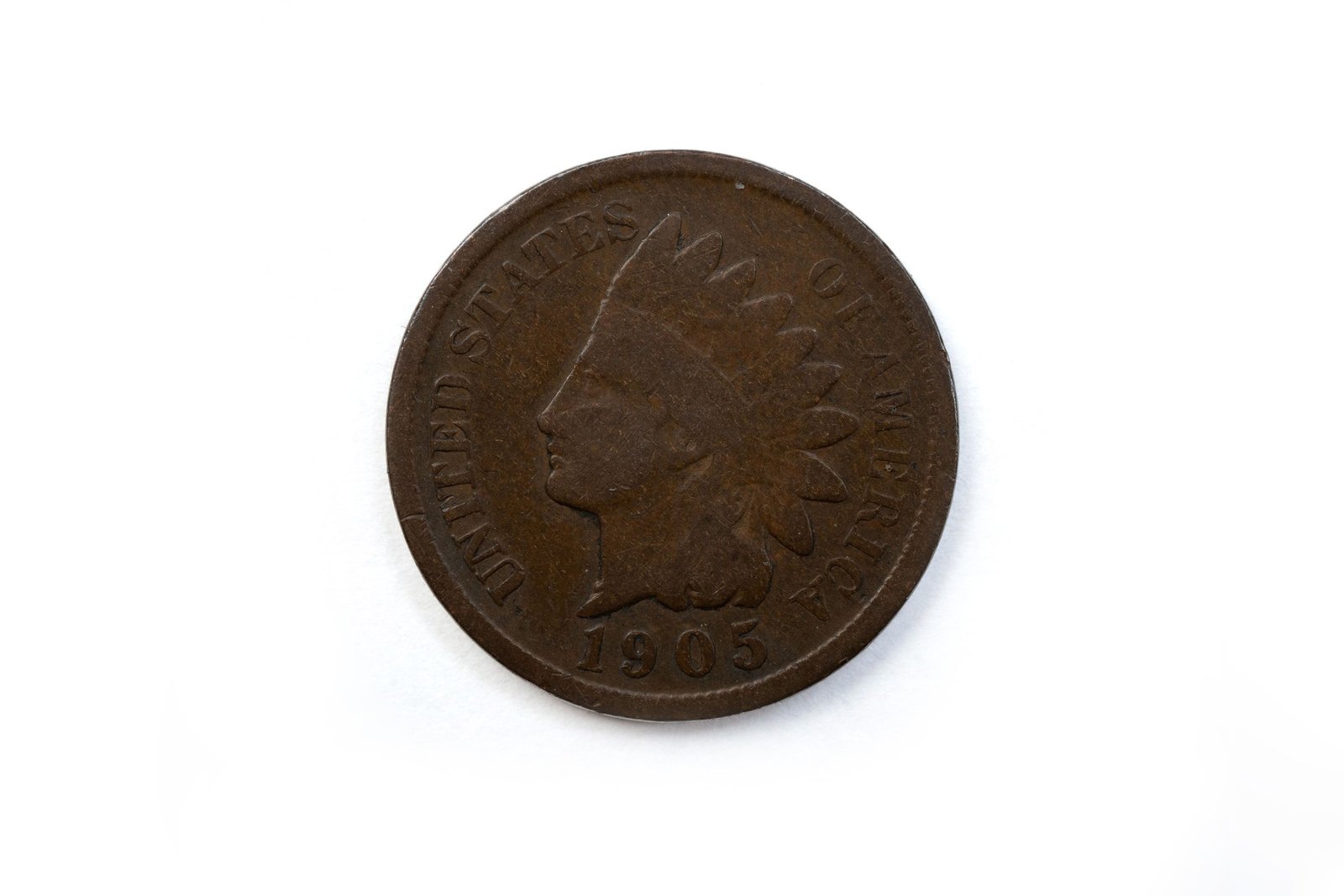
The obverse of the coin features a portrait of Liberty facing left. She is wearing a feathered headdress worn by Native American leaders. The word “LIBERTY” appears on the headband of the headdress. “United States of America” is inscribed on the edge of the coin, while the date appears below.
Reverse (Back)
The reverse design has changed once in the coin’s history.
- 1859 design: A laurel wreath surrounding the words “One Cent”.
- 1860–1909 design: An oak wreath surrounding the words “One Cent”, with a small shield added above.
Authorization and Production
The introduction of the Indian Head cent was linked to the U.S. coinage reforms that commenced in 1857. Manufacturing started in 1859 at the United States Mint in Philadelphia.
Production later expanded to San Francisco in 1908 and 1909, where the coins carried an “S” mint mark. The composition of the metal also varied during its production:
- 1859–1864: 88% copper and 12% nickel
- 1864–1909: 95% copper with small quantities of tin and zinc (bronze).
This alteration was implemented during the Civil War because the bronze alloy was simpler to work with.
Public Demand
The public demand for the Indian Head cent continued to grow throughout the 19th century. The coin became especially important during the Civil War, when economic uncertainty led people to hoard gold and silver coins.
The coin’s popularity also increased due to its manageable size compared to the older large cents. Its convenient design made it easy to carry and use in everyday business.
Indian Head Cent Specifications
The Indian Head cent had several technical specifications that remained mostly consistent throughout its production.
Basic Specifications
- Years minted: 1859–1909
- Designer: James Barton Longacre
- Diameter: 19.05 millimeters
- Edge: Plain
- Shape: Round
Weight
- 1859–1864: 4.67 grams
- 1864–1909: 3.11 grams
Composition
- Early coins: Copper-nickel alloy
- Later coins: Bronze (95% copper)
What Are Indian Head Cents Worth Today?
The value of Indian Head Cents depends on a variety of factors, including rarity, condition, and mint mark. Since millions of coins were minted, many common dates are relatively affordable.
Common price ranges include:
- Worn or circulated coins: $1 to $10
- Average collectible condition: $20 to $100
- Uncirculated coins: $150 or more
Rare coins can be worth significantly more. For example:
- 1877 Indian Head Cent: Often worth hundreds or thousands of dollars depending on condition.
- 1909 Indian Head Cent: Another rare variety prized by collectors.
Some exceptionally well-preserved coins have sold for several thousand dollars at auction. Because of this wide range of prices, Indian Head Cents remain a popular entry point for coin collectors.
Conclusion
The Indian Head Cent is an important symbol in the history of American coinage. Even today, the Indian Head Cent is highly prized by collectors and historians. While common coins may be worth only a few dollars, rare, dated, and well-preserved examples can fetch impressive prices. More importantly, the coin stands as a lasting monument to 19th-century American culture, commerce, and craftsmanship in coin design.
-
1905 Indian Head Cent (G-4)
$10.00 -
1908-S Indian Head Cent (G-4)
$150.00