The two-cent Piece is one of the most distinctive and historically significant coins ever issued by the United States. Although it was minted for less than a decade, its importance far exceeds its short lifespan. The coin is particularly notable because it was the first U.S. coin to feature the national motto, “In God We Trust.”
History
The Two-Cent Piece made its debut in 1864, amidst the turmoil of the American Civil War, a time when the nation experienced considerable economic instability. As individuals began to hoard gold and silver coins, there was a notable deficit of small change available in the market.
To tackle this problem, the U.S. government started minting coins composed of base metals like bronze. The design was crafted by James B. Longacre, who held the position of Chief Engraver at the U.S. Mint. His design for the Two-Cent Piece was both utilitarian and emblematic, symbolizing the country’s need for unity and hope during a period of strife. The coin rapidly entered circulation and contributed to alleviating the shortage of lower denominations.
Design
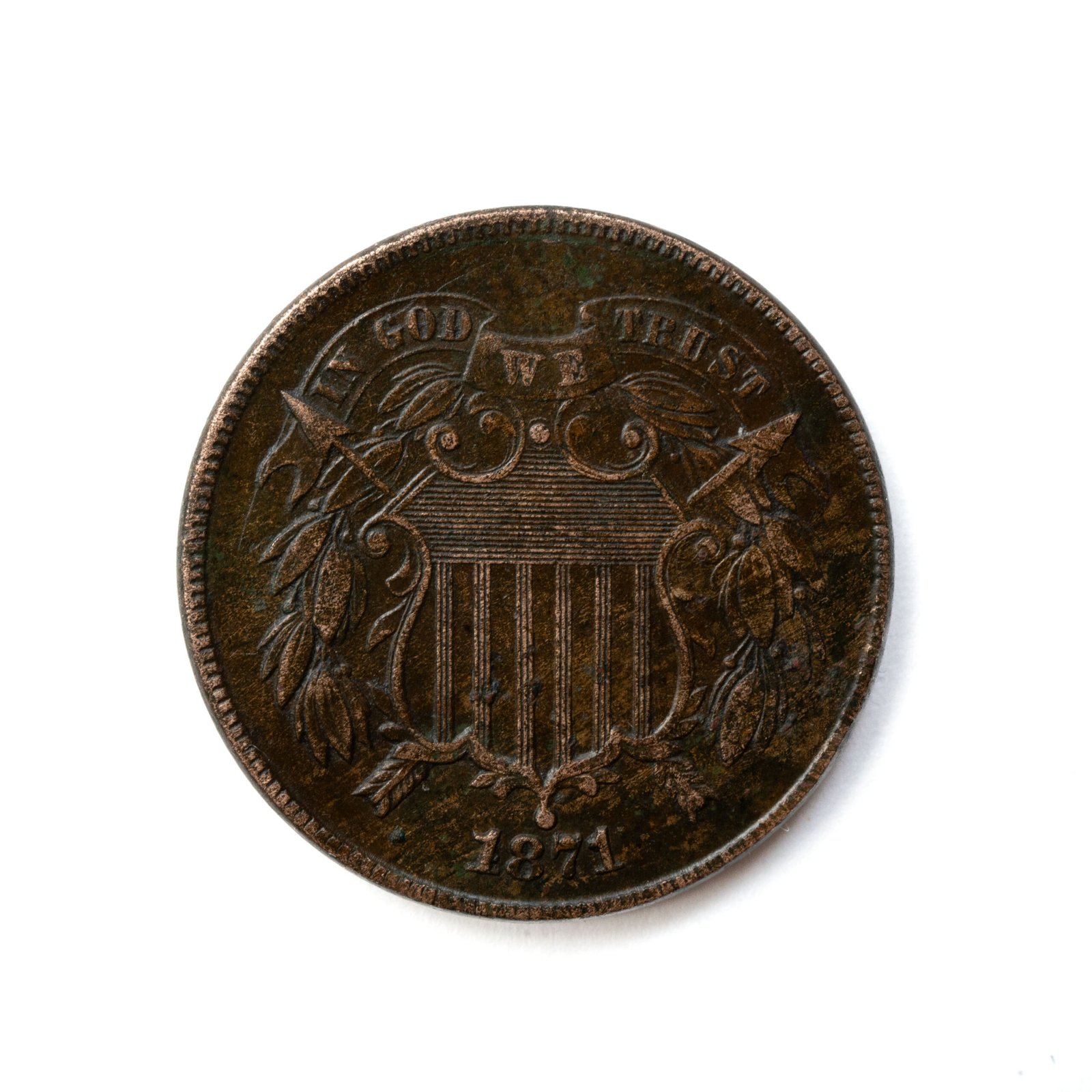
The design of the Two-Cent Piece is straightforward yet profoundly symbolic, embodying the values of the time in which it was produced.
- Obverse (Front): On the obverse side, a prominent shield is featured, adorned with a ribbon above that showcases the motto “In God We Trust.” This marked the inaugural appearance of the motto on U.S. currency, signifying the heightened religious sentiment during the Civil War. The shield represents national unity and resilience.
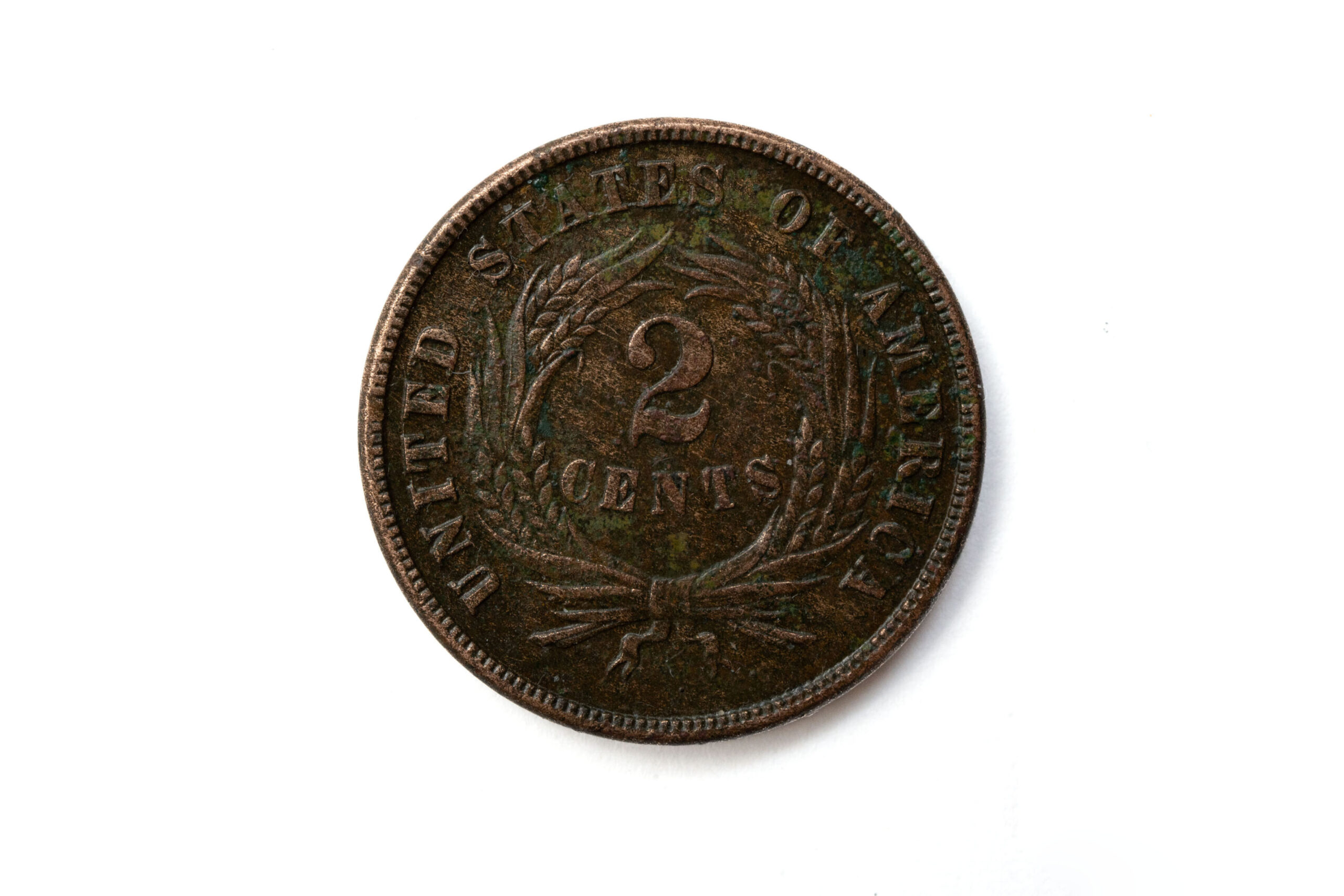
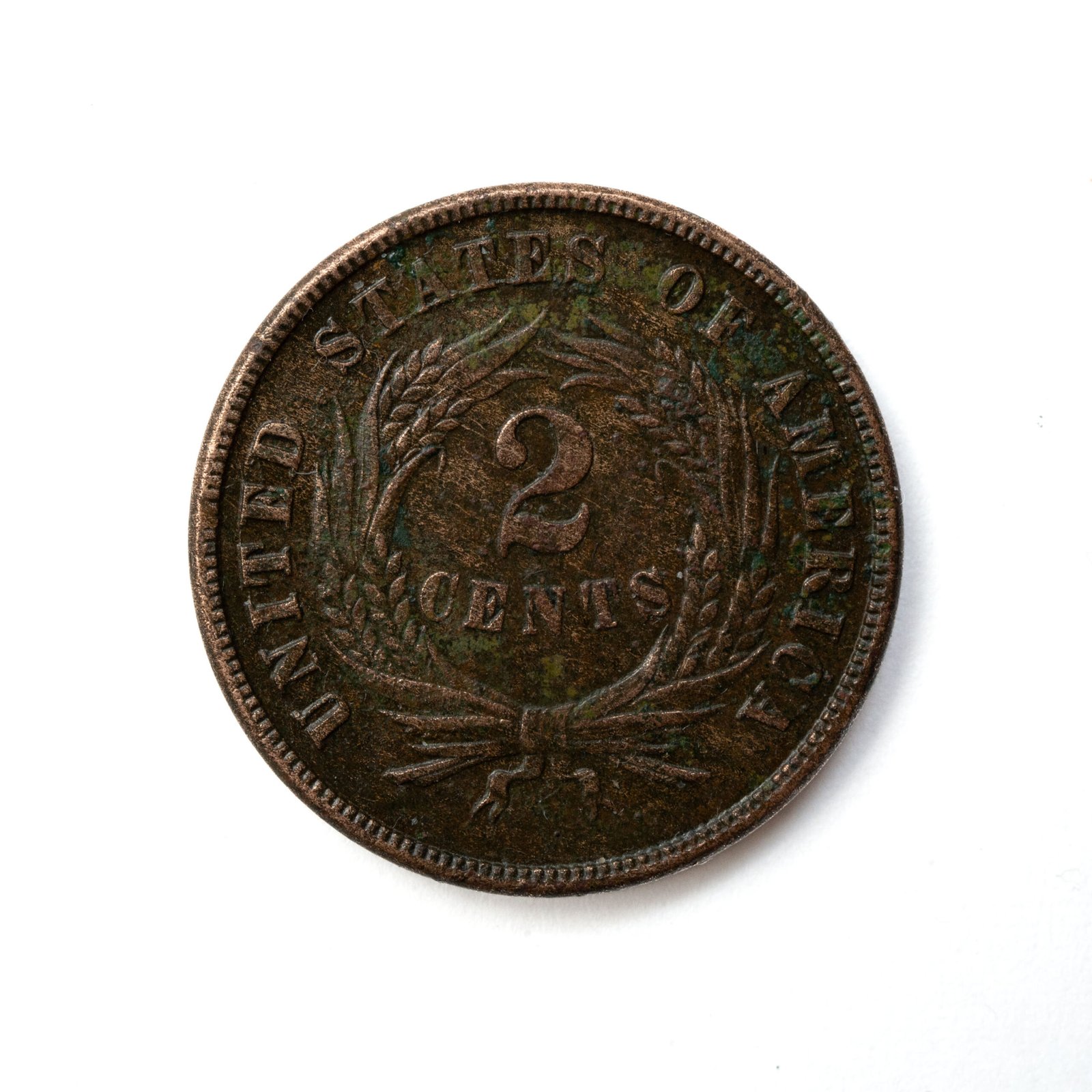
- Reverse (Back): The reverse side displays a wreath composed of wheat and other agricultural elements, encircling the denomination “2 CENTS.” This imagery symbolizes abundance, growth, and optimism for the nation’s future.
Although not as artistically intricate as subsequent coins, the Two-Cent Piece’s design holds considerable historical and cultural significance.
 Authorization and Production
The Two-Cent Piece was sanctioned by Congress in 1864 as a solution to the coin shortage resulting from the Civil War. It became one of the initial U.S. coins produced mainly from base metals instead of precious ones, signifying a notable change in coin manufacturing.
The coin was solely minted at the Philadelphia Mint, which is why there are no mint marks on any of the coins. In its inaugural year, production surged, with millions of pieces produced to satisfy the pressing need for small change.
Nonetheless, as the economy improved and new coin denominations were introduced, the demand for the Two-Cent Piece diminished. Production saw a significant drop after the late 1860s, and the coin was eventually phased out in 1873.
Public Demand
At the time of its introduction, the Two-Cent Piece was widely accepted and served an important role in everyday commerce. It helped fill a critical gap in the currency system during a time when coins were scarce.
Despite its early usefulness, the coin gradually fell out of favor. Its unusual denomination made it less convenient compared to other coins, such as the nickel, which became more popular in daily transactions.
In modern times, public demand for the Two-Cent Piece has shifted from practical use to collector interest. Collectors value the coin for several reasons:
- Its connection to the Civil War era
- It’s status as the first coin to feature “In God We Trust.”
- It’s a relatively short production period
These factors contribute to its ongoing popularity in the numismatic community.
Two-Cent Piece Specifications
The Two-Cent Piece has distinct physical characteristics that set it apart from other U.S. coins:
- Face Value: 2 cents (USD)
- Composition: 95% copper, 5% tin, and zinc
- Weight: 6.22 grams
- Diameter: 23 mm
- Edge: Plain
- Years Minted: 1864–1873
- Mint Location: Philadelphia only
Its large size and copper composition give it a bold and recognizable appearance.
What are Two-Cent Pieces Worth Today?
The value of a two-cent coin depends on several factors, including its condition, year, and rarity.
- Common coins: These are typically worth between $10 and $30, depending on wear and tear and overall condition.
- High-quality coins: Coins with clear designs and minimal wear can be worth $50 to $150 or more.
- Rare varieties: Some specific editions, such as the 1864 ‘Small Moto’ variety, are particularly valuable and can be worth hundreds or even thousands of dollars.
Due to their historical significance and limited production, two-cent pieces tend to increase in value over time, especially when they are well preserved.
Conclusion
The Two-Cent Piece remains a fascinating and important part of American numismatic history. Introduced during the American Civil War, it addressed a critical economic need while also reflecting the nation’s values through its design and symbolism.